

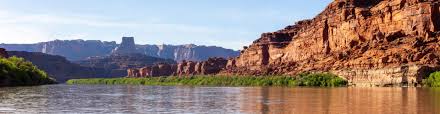
The Colorado River is the most important river in the United States today. It supplies water for approximately 40 million people from Colorado, Wyoming, Utah, New Mexico, Arizona, Nevada, California, and Mexico. The water from this river is the lifeline of the American West, and its situation is dire.
The river has always been feuded over, but there was a solution that worked for decades. In 1922, the seven states in the Colorado River Basin passed the Colorado River Compact. The Water Education Foundation explains that it divided the states into the Upper Basin (Colorado, Wyoming, Utah, and New Mexico) and the Lower Basin (California, Nevada, and Arizona), and stipulated that each basin could use 7.5 million acre-feet a year.
Since this agreement, the Western United States has changed drastically.
The river has faced a significant decline due to climate change and overuse. According to the Environment and Energy Study Institute, since 2000, the river’s natural flows have been 20% lower than the average in the previous century. The Colorado River is currently facing “the hottest and driest period in the last 1,500 years.”
The loss of water due to climate change is worsened by consumption exceeding the natural supply. 18% of the Colorado River goes to urban use, 19% supports natural vegetation, 11% evaporates, and the remaining 52% is used up by irrigated agriculture. 62% of the irrigation is for cattle feed alone. Population powerhouses in the West, such as Denver, Los Angeles, San Diego, Las Vegas, Phoenix, Tucson, and Salt Lake City, all rely on the river and have a forever-growing demand for its water.
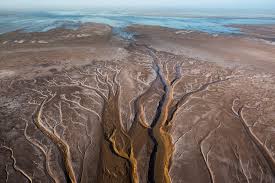
This once magnificent river was seen as the ultimate force of opportunity, but now there are too many straws sucking from it. Since the 1960s, the river has only finished its natural course through pulses of water released in 1998 and 2014 from dams in the U.S. and Mexico. These pulses are the only time the river reaches the ocean, and it only lasts a few weeks. The rest of the time, the former delta is a barren salt flat.
There have been a variety of solutions proposed to solve this water crisis, but very few have been seriously considered. Mr. Ziser, Southwest Studies teacher, says that the most practical solution so far “is to renegotiate the Colorado River compact as it currently exists . . . based on the level of water in the level of snowpack that actually exists.” He explains that the biggest issue with this solution is that the lower basin states will face significant reductions in the amount of water they will be allowed.
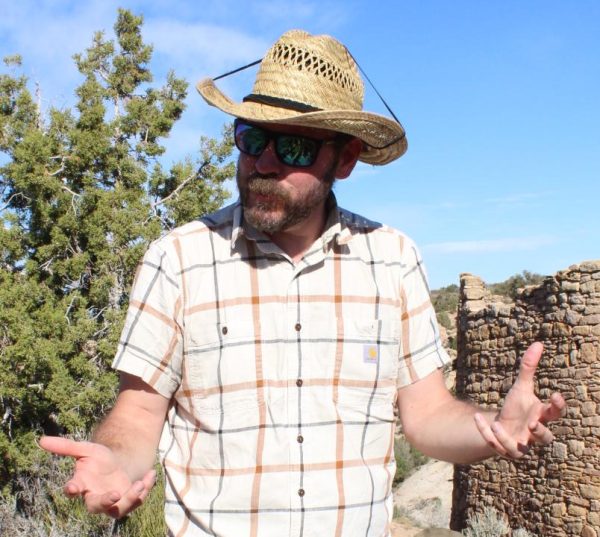
This creates a dilemma for deciding how the water will be used: “There are cities and homes and people who live there, but in California, there’s food and . . . not just food that’s being grown for Californians, that’s food that’s being grown for all of the United States.”
The Trump Administration has given the seven basin states until February 14th to agree on a solution, but there have been few to no agreements made besides the fact that they must do something. According to the Los Angeles Times, if an agreement is not made, the federal government will likely have to step in. This could result in “unilateral cuts and spark lawsuits that would bring a complex court battle.”
Despite the importance of this issue, national news remains focused and distracted by other events. People need to be informed about this dire situation, or our hamburgers will continue to consume the majority of the water.


