

After the third deadline extension, officials from Colorado, Wyoming, Utah, New Mexico, Arizona, Nevada, and California were given until February 14th to come up with a solution for the Colorado River crisis. As a result, the federal government will need to step in to find a solution for them.
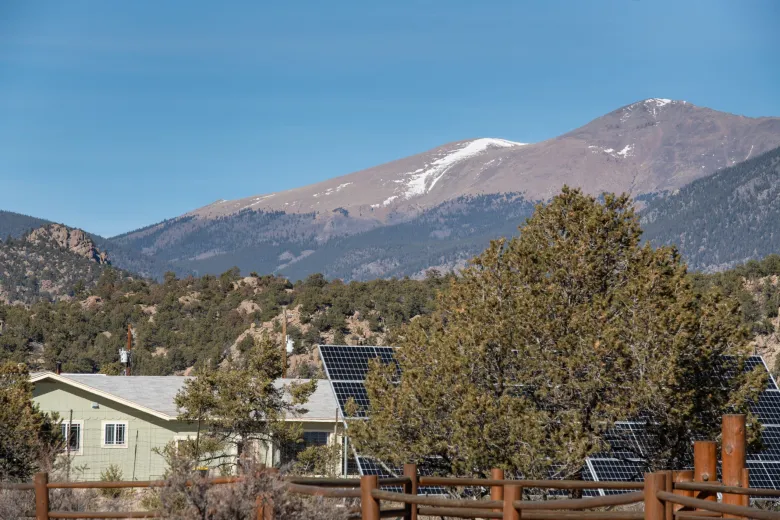
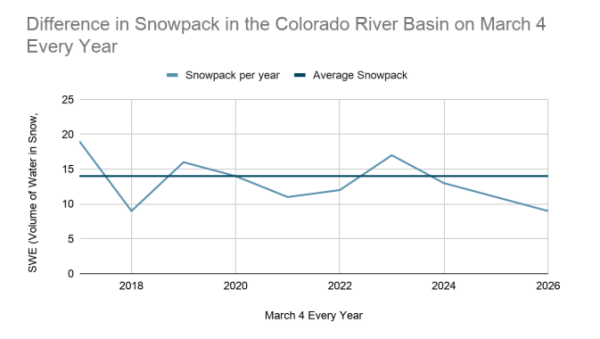
The Colorado River has been facing a mega drought, which started in 2000, and has only continued to worsen. This winter, there is historically low snowpack in the Upper Colorado River Basin, where 90% of the water in the Colorado River comes from.
According to KUNC, the Colorado River headwaters, the Gunnison River Basin, the Four Corners, and Southeastern Utah are all seeing snowpack numbers as high as 53% below the median.
Despite these dire conditions, the seven states are still reluctant to give up the water they were promised over 100 years ago, which no longer exists.
Mr. Ziser, AP Government and Southwest Studies teacher at Coronado High School, states that “I’m not surprised, but I am very disappointed” in the lack of compromise between states and the federal government. He says that there is a high likelihood that this issue will go to the court, where states will sue each other and will take decades to find a resolution.
Mr. Ziser expresses that the states and federal government must accept this harsh reality: “If groups are unwilling to compromise on anything, they end up losing out on the thing they want the most . . . which means that all of us get nothing.”


