The Colorado River Compact is an agreement created to allocate water from the Colorado River to states in need. The states included are Colorado, Arizona, Nevada, Utah, New Mexico, California, and Wyoming. These states are divided into upper and lower basin groups, and each state was allocated a specific acre-foot amount of Colorado River water in 1922; however, the river does not produce the same amount of water every year.
This created a problem, as river levels decreased, each state continued to expect the same amount of water, leading to overuse and causing the river to slowly dry. The once roaring and prosperous river no longer consistently reaches its final destination, the Gulf of California (also known as the Sea of Cortez).
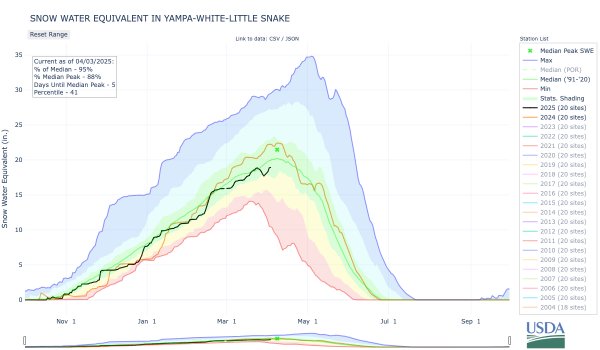
In recent years, the river has not reached full capacity due to lower amounts of snow and rainfall during the winter months. Additionally, higher summer temperatures have increased evaporation from reservoirs and rivers.
Although the Colorado River Compact was originally signed in 1922, low water levels have brought it back into debate. The compact was set to be reviewed and finalized by all participating states by February 2026, but a new agreement has not yet been finalized or even agreed upon.
This poses a significant issue. The federal government previously stated it would step in if the states could not reach an agreement; however, this has not yet happened, and the lack of action has not pushed the states toward a stronger consensus.
The Colorado River Compact affects all residents of Colorado, California, Utah, Arizona, Nevada, Wyoming, and New Mexico because the river contributes to the water supply that sustains their cities. Mr. Steve Ottmer, Outdoor and Expeditionary Science teacher, stated, “We would have to imagine a world without cities like Las Vegas and Los Angeles.”
This information is vital for the public to understand so they can make informed decisions and contribute to protecting the Colorado River; however, the lack of public awareness is not only harming the river but also the people who depend on it. In an interview, Mr. Jeffrey Ziser, AP Government and Southwest Studies teacher, explained why the issue receives so little attention: “There are several reasons why it is not being talked about, many of them revolving around negative public perception.”
Like many issues in life, knowledge is power, and the Colorado River Compact is no exception. When residents are informed, they gain a sense of awareness and control. Without that knowledge, uncertainty about water availability and crop production can lead to fear that cities may no longer be sustainable.
Overall, the Colorado River Compact needs greater public attention to keep residents informed, encourage responsible decision-making, and push for a resolution before the beloved Colorado River runs dry.