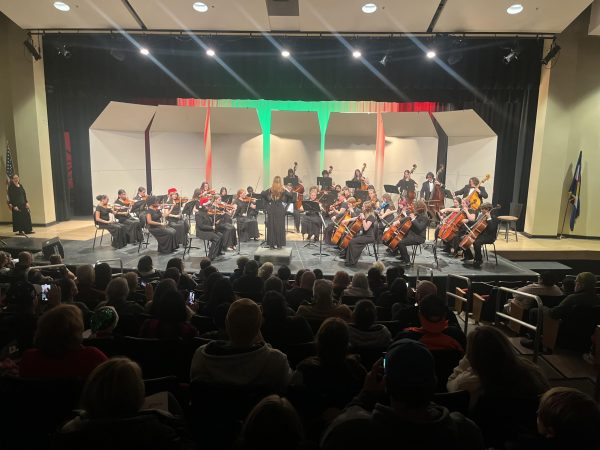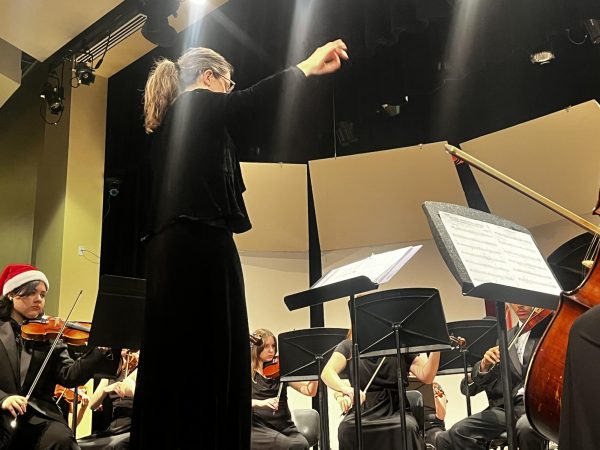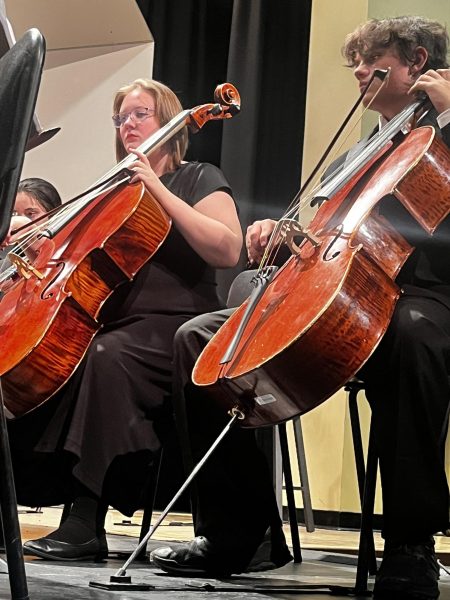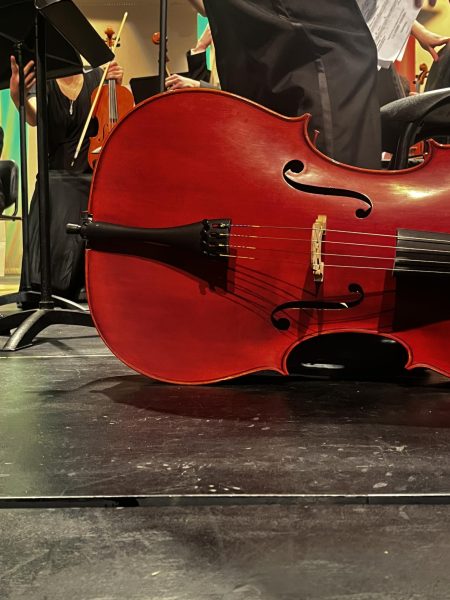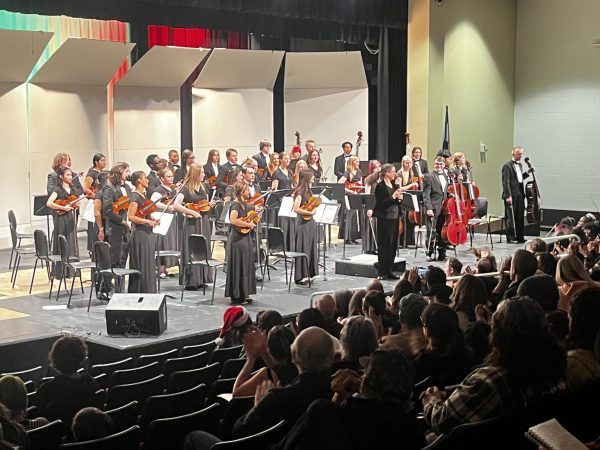

When the lights dim and the first note rings out across the Coronado auditorium, the audience sees only the polished final product: coordinated bow strokes, confident posture, and the swell of strings filling the room. What they don’t see is everything leading up to it—the hours of rehearsal, after-school practice, the quiet frustrations, and the collective dedication that transforms dozens of individual musicians into a single, unified orchestra.
Coronado High School’s orchestra—led by director Mrs. West—is known not only for its musical strength, but also for its community. Many players say their journey into the program wasn’t straightforward, but built on moments that drew them toward music long before they understood how much it would come to mean.
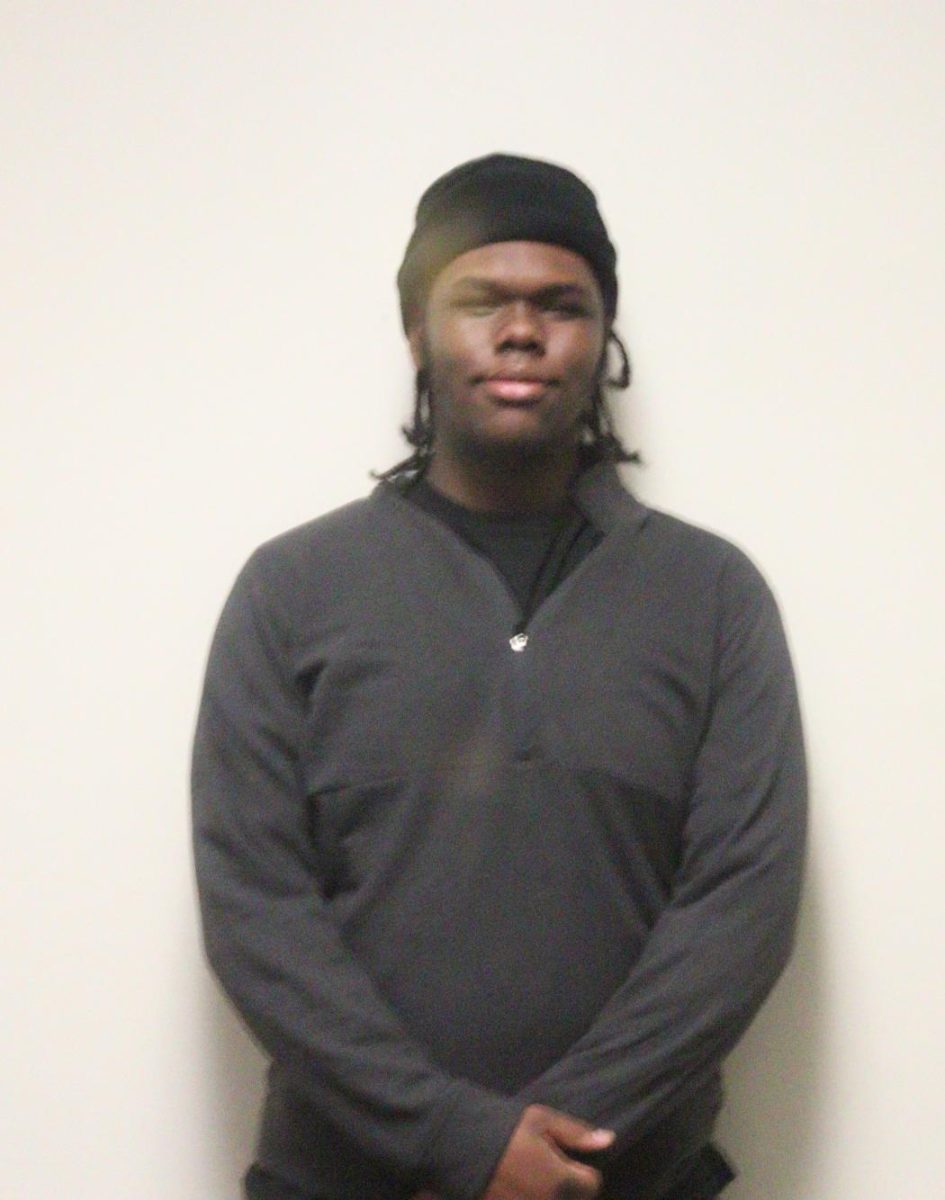
Junior cellist Quinn Howard, who plays in both the Symphonic and Chamber Orchestras, explained that they didn’t originally intend to pursue orchestra seriously. “I rejoined in eighth grade just for fun,” they said, “but over the years, I built a better understanding of music and what it means to me. That’s what keeps me going now.”
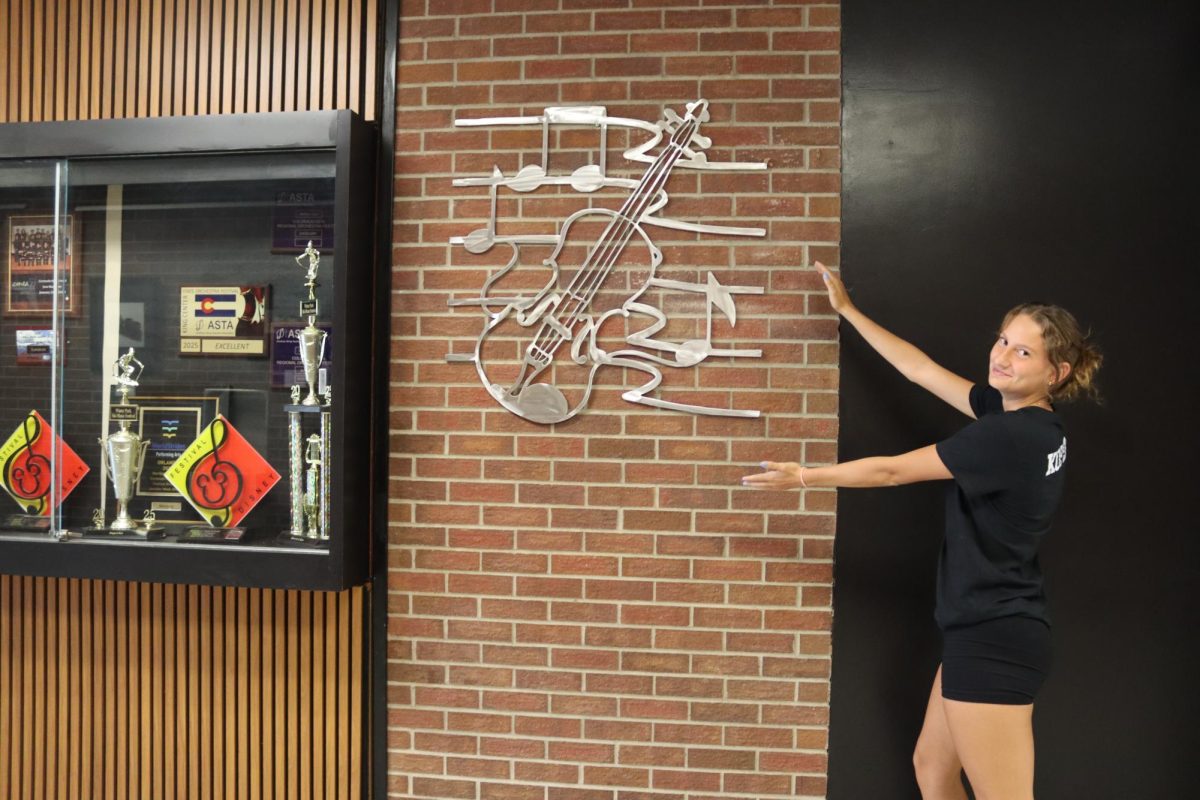
Sophomore violinist and cellist Brooklyn Thomeier, who also plays in both the Symphonic and Chamber Orchestras, echoed that sense of early inspiration. She remembered being captivated as a child by orchestras on television: “I always thought it was beautiful,” she said. “Now, Orchestra surrounds my entire life. My life would feel empty without it.”
These perspectives highlight a trend: students enter orchestra for different reasons, but they stay because they find something meaningful—community, purpose, or simply a place where music becomes a part of everyday life.
When asked what makes Coronado’s orchestra program strong, both students immediately pointed to the people around them. Quinn emphasized the blend of skill levels and the shared motivation that unites everyone: “It’s amazing seeing people who are just starting playing alongside more advanced players who take it seriously. All of us working together is what creates something amazing.”
Brooklyn highlighted a different angle—the leadership behind the program. “Mrs. West bends over backwards at every turn to make our orchestra great,” she said. “She puts so much time, thought, and effort into helping every student reach their full potential. She really has made our orchestra stronger.”
Students consistently credit Mrs. West’s music choices as well—selections designed not only to fit the ensemble, but to push them. Quinn noted that “she always chooses music that fits our group and can help us improve,” adding that the program wouldn’t be the same without her or the students who are committed to working hard.
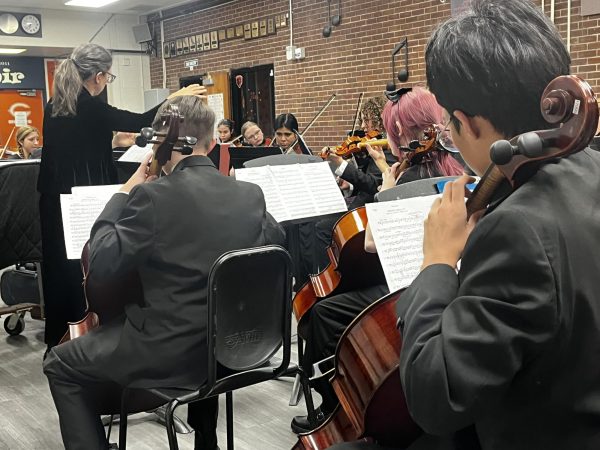
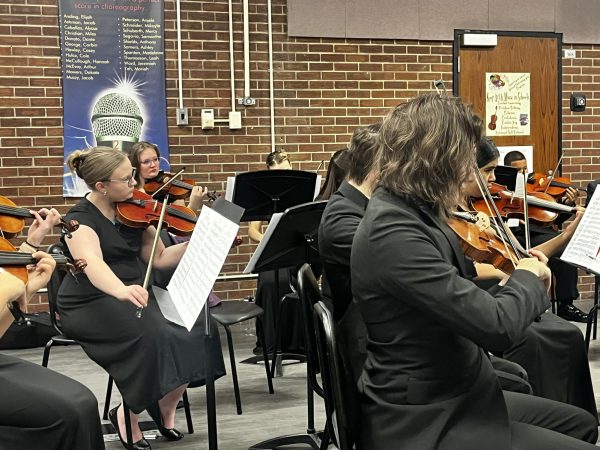
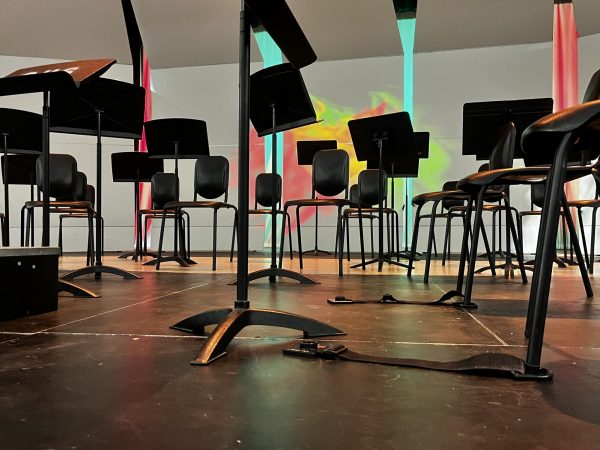
But while the audience sees a clean, coordinated performance, the reality behind the scenes is far less neat. Quinn described it bluntly: “Our behind-the-scenes is actually a pretty big mess most of the time,” they laughed. “It takes everyone doing their best in class, in rehearsals, and also practicing at home.” Chamber students even attend extra sectional rehearsals to polish their parts, a level of effort most concertgoers never realize.
The pressure of performing also plays a significant role. Brooklyn admitted that she gets nervous every time she steps on stage. “I want everything to be perfect,” she said. “The untrained ear wouldn’t notice small mistakes, but performers pick out every little detail. I’m paying extra attention to everything I do.”
Quinn agreed, saying that while nerves never fully go away, the payoff makes everything worth it: “It’s so rewarding to finally show off the music we’ve been working on for weeks or months.”
Through these student perspectives, a clear picture emerges: Coronado’s orchestra is far more than an extracurricular. It is a community built on countless hours of practice, a willingness to grow, and a director who supports her students every step of the way. It is a place where beginners and advanced players work side by side, where chaos and dedication coexist behind the curtain, and where music becomes something students carry with them long after the final note fades.
And while audiences may only witness the finished performance, the sound they hear is shaped by every unseen moment—messy, exhausting, joyful, and absolutely worth it.